Follow us on Facebook to receive important updates Follow us on Twitter to receive important updates Follow us on sina.com's microblogging site to receive important updates Follow us on Douban to receive important updates
Chinese Text Project Wiki
-> 韓詩外傳

《韓詩外傳》[View] [Edit] [History]

Author韓嬰
DynastyWestern Han
Base text
《漢魏叢書》本
Data itemctext:397101
Search:
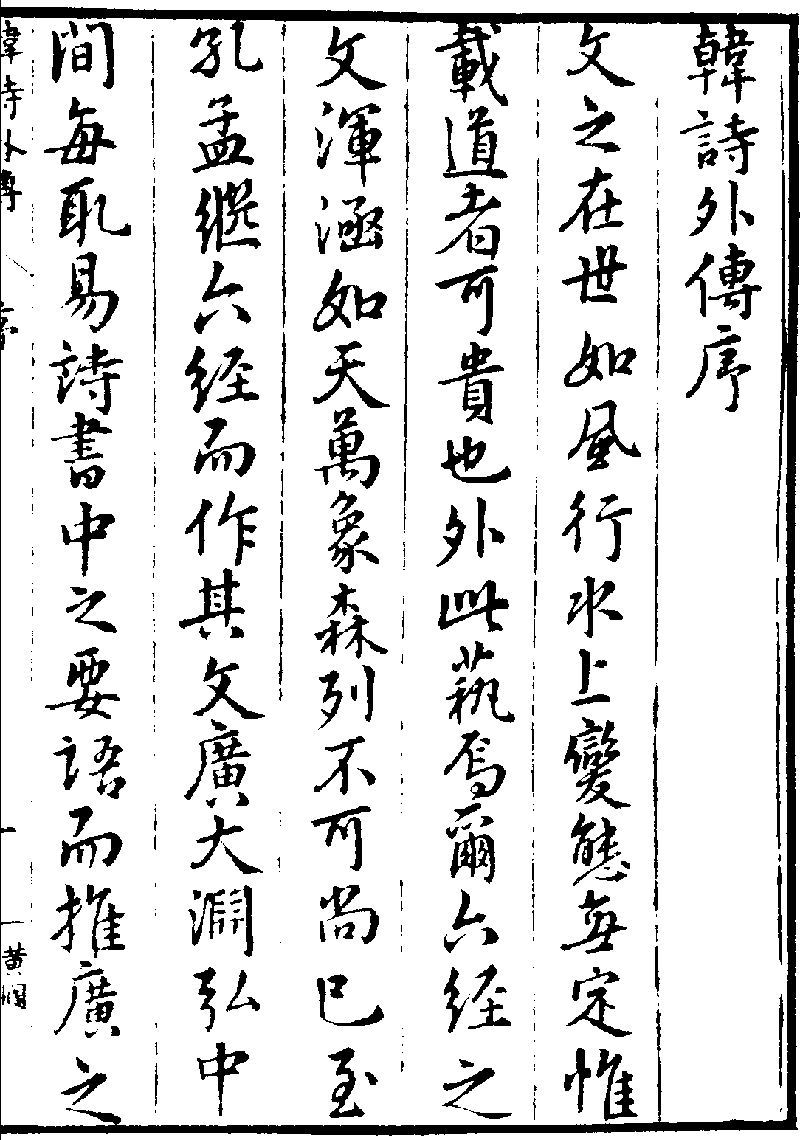
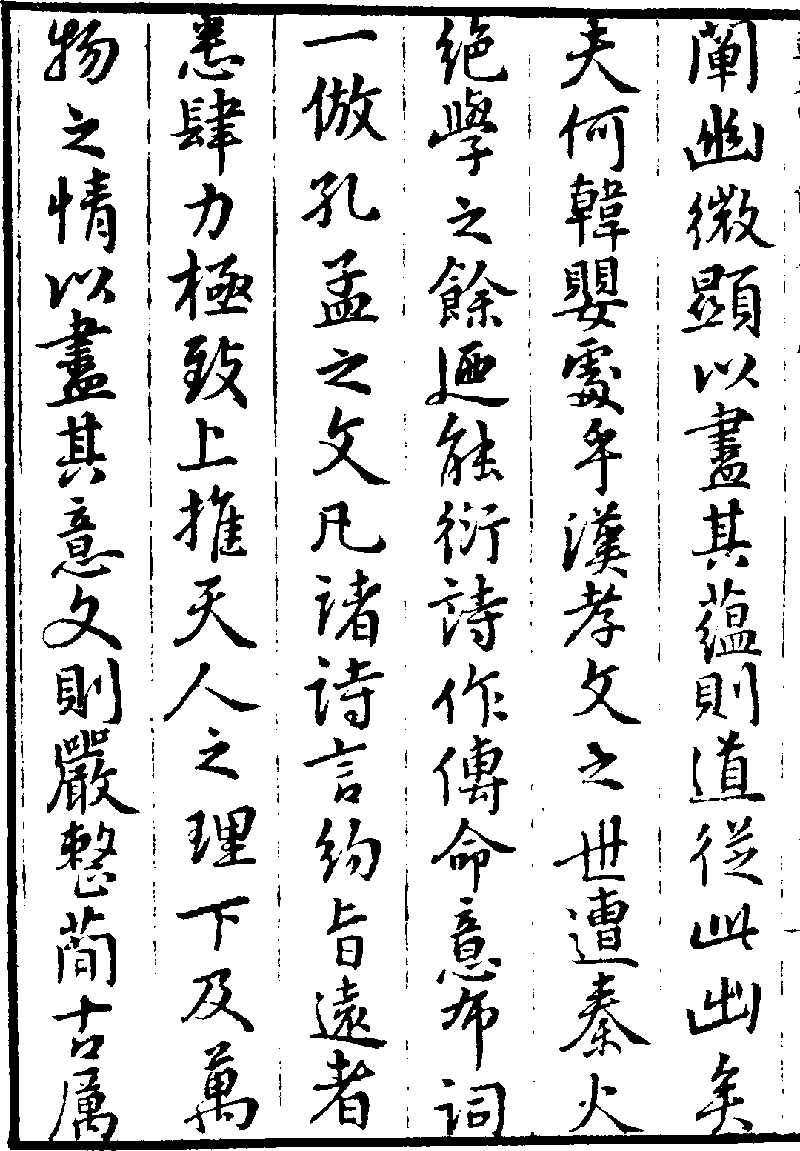
The 'Han Shi Wai Zhuan' (《韓詩外傳》) is a ten-volume work attributed to Han Ying, a scholar of the Han dynasty. Han Ying, an official from Yan and a court figure during the reigns of Emperors Wen and Wu, compiled this text as part of his broader commentary on the 'Shijing' (Classic of Poetry). The work is one of several associated with the "Han Shi" school of interpretation, including now-lost texts such as the 'Han Gu', 'Nei Zhuan' (Inner Transmission), and 'Hai Zhuan' (Sayings). By the Northern and Southern Song dynasties, most of these works had perished except for the 'Wai Zhuan'.

The 'Wai Zhuan' is characterized by its integration of historical anecdotes and philosophical discussions with excerpts from the 'Shijing', though it does not directly analyze poetic interpretation. Instead, it uses poetic verses to illustrate broader moral or political lessons. This approach diverges from traditional exegesis, leading Ban Gu to critique its reliance on external sources like the 'Spring and Autumn Annals' and eclectic "杂说" (miscellaneous sayings). Some content overlaps with ideas found in pre-Han philosophers such as Zhou Qin zhi zi (the scholars of the Zhou and Qin periods).

Scholars have noted inconsistencies within the 'Wai Zhuan'. For instance, Hong Mai's 'Rongzhai Suibi' (《容齋隨筆》) critiques its narrative of "Agu Chunu" and other questionable historical claims. Additionally, the text contains anachronisms or factual errors, such as attributing events to incorrect figures like Peng Zu or misrepresenting Confucian teachings. Despite these flaws, it preserves rare citations from earlier works, including a truncated version of Xunzi's 'Fei Shier Zi' (非十二子) and analogies later adopted by Dong Zhongshu in the 'Luxuriant Dew of the Spring and Autumn Annals'.

The structure of the 'Wai Zhuan' typically begins each section with a 'Shijing' verse, though 28 entries lack this feature. Some passages, like "Wu Yu Ru" (吾語汝), appear abruptly without context, suggesting possible omissions or corruption in transmission. Li Shan's annotations on the 'Wenxuan' (《文選》) reference lost sections of the 'Wai Zhuan', such as a tale about "Hanshao Er Nu" (漢皋二女), which do not survive in extant versions.

Classified by later scholars like Wang Shizhen as prioritizing historical illustration over poetic analysis, the 'Wai Zhuan' was initially grouped with Han-period 'Shijing' commentaries. However, its focus on anecdotes has led to debates about its relevance to classical interpretation. Despite this, it remains a critical source for understanding early Han scholarship and is preserved in part due to its pre-'Maochang' origins.

Read more...

1.
卷一
2.
卷二
3.
卷三
4.
卷四
5.
卷五
6.
卷六
7.
卷七
8.
卷八
9.
卷九
10.
卷十
[Versions of this work (7)]
URN: ctp:wb63924

Enjoy this site? Please help.Site design and content copyright 2006-2026. When quoting or citing information from this site, please link to the corresponding page or to http://ctext.org. Please note that the use of automatic download software on this site is strictly prohibited, and that users of such software are automatically banned without warning to save bandwidth. 沪ICP备09015720号-3Comments? Suggestions? Please raise them here.Do not click this link