Follow us on Facebook to receive important updates Follow us on Twitter to receive important updates Follow us on sina.com's microblogging site to receive important updates Follow us on Douban to receive important updates
Chinese Text Project
Translation setting:[None] [English]
-> -> -> -> Chu Zhao Yueji

《楚昭越姬 - Chu Zhao Yueji 》

English translation: AI and Chinese Text Project users [?] Library Resources
1 楚昭越姬:
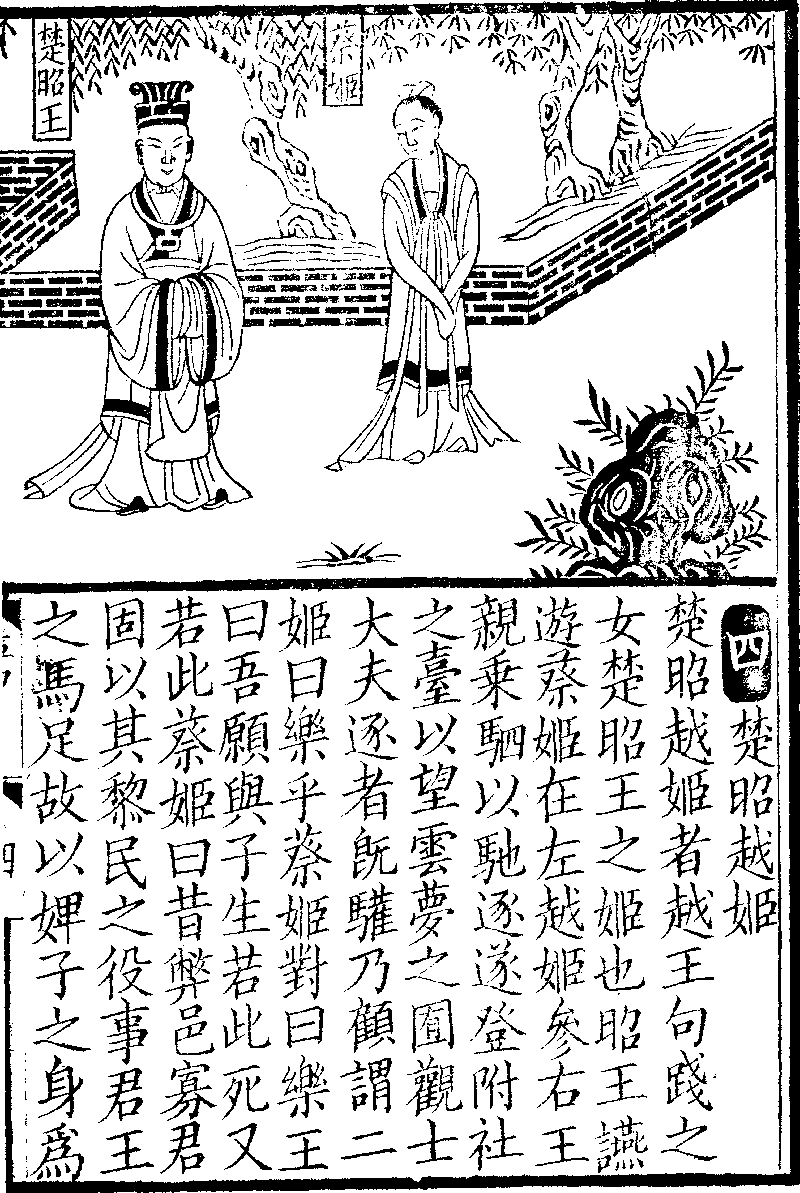
楚昭越姬者,越王句踐之女,楚昭王之姬也。昭王讌遊,蔡姬在左,越姬參右。王親乘駟以馳逐,遂登附社之臺,以望雲夢之囿。觀士大夫逐者既驩,乃顧謂二姬曰:「樂乎?」蔡姬對曰:「樂。」王曰:「吾願與子生若此,死又若此。」蔡姬曰:「昔弊邑寡君,固以其黎民之役,事君王之馬足,故以婢子之身為苞苴玩好,今乃比於妃嬪,固願生俱樂,死同時。」王顧謂史書之,蔡姬許從孤死矣。
Chu Zhao Yueji was a daughter of King Goujian of Yue and a concubine of King Zhao of Chu. King Zhao once dined and toured, with Cai Ji on his left and Yueji on his right. The king personally rode a four-horse chariot to gallop, then ascended the Fusha Terrace to gaze upon the Yungmeng hunting grounds. Observing that the court officials chasing were already joyous, he turned and said to the two concubines, "Is this enjoyable?" Cai Ji replied, "It is enjoyable." The king said, "I wish to live with you like this and die like this as well." Cai Ji said, "In the past, my late lord of our humble state served your Majesty's horses with the labor of his people. Therefore, I was sent as a lowly servant girl to offer gifts and trifles for amusement. Now you have placed me on par with consorts and attendants; indeed, I would gladly live in joy together with you and die at the same time." The king turned to the historian and ordered it recorded: Cai Ji had agreed to follow him in death.

2 楚昭越姬:
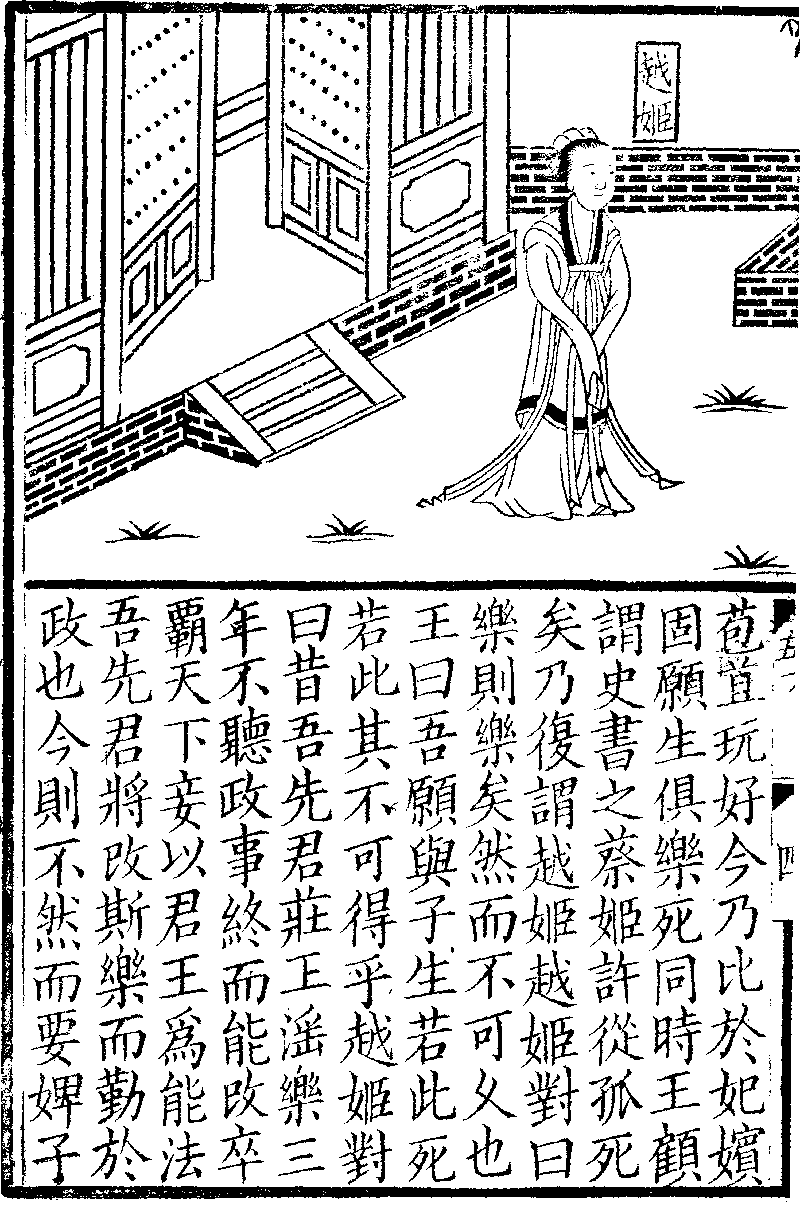
乃復謂越姬,越姬對曰:「樂則樂矣,然而不可久也。」王曰:「吾願與子生若此,死若此,其不可得乎?」越姬對曰:「昔吾先君莊王淫樂三年,不聽政事,終而能改,卒霸天下。妾以君王為能法吾先君,將改斯樂而勤於政也。今則不然,而要婢子以死。其可得乎!且君王以束帛乘馬取婢子於弊邑,寡君受之太廟也,不約死。妾聞之諸姑,婦人以死彰君之善,益君之寵,不聞其以苟從其闇死為榮,妾不敢聞命。於是王寤,敬越姬之言,而猶親嬖蔡姬也。
He then asked Yueji, who replied, "It is enjoyable, but it cannot last long." The king said, "I wish to live with you in this manner and die in this manner. Is that truly unattainable?" Yueji replied, "In the past, our late lord King Zhuang of Yue indulged in pleasure for three years and neglected state affairs, but eventually he reformed himself and ultimately became a hegemon over all under heaven. I thought your Majesty would emulate our late lord, reforming from such pleasures and diligently attending to governance." But now it is not so; instead you demand that a lowly servant girl die with you. How can such a thing be acceptable!" Moreover, your Majesty sent bolts of silk and four horses to obtain me from our humble state; my late lord accepted this in the ancestral temple, without any agreement regarding death. I have heard from my elder female relatives that a woman should use her death to highlight the virtue of her lord and enhance his favor, but I have never heard it considered honorable for a woman to recklessly follow in darkness to death. I dare not obey such an order. At this, the king was enlightened and respected Yueji's words, yet still favored Cai Ji personally.

3 楚昭越姬:
居二十五年,王救陳,二姬從。王病在軍中,有赤雲夾日,如飛烏。王問周史,史曰:「是害王身,然可以移於將相。」將相聞之,將請以身禱於神。王曰:「將相之於孤猶股肱也,今移禍焉,庸為去是身乎?」不聽。越姬曰:「大哉君王之德!以是,妾願從王矣。昔日之遊淫樂也,是以不敢許。及君王復於禮,國人皆將為君王死,而況於妾乎!請願先驅狐狸於地下。」王曰:「昔之遊樂,吾戲耳。若將必死,是彰孤之不德也。」越姬曰:「昔日妾雖口不言,心既許之矣。妾聞信者不負其心,義者不虛設其事。妾死王之義,不死王之好也。」遂自殺。
Twenty-five years later, when the king went to rescue Chen, both concubines accompanied him. While the king was ill in the army, a red cloud flanked the sun, resembling a flying bird. The king asked the historian of Zhou, who said, "This omen harms your Majesty personally, but it can be transferred to a general or minister." Upon hearing this, the generals and ministers requested to offer themselves in prayer to the gods. The king said, "Generals and ministers are like arms and legs to me; now transferring the calamity away from them—how could I abandon this body?" He did not listen. Yueji said, "How great is your Majesty's virtue!" Because of this, I wish to follow the king." In the past, when you indulged in pleasures and idle pursuits, that is why I dared not agree. Now that your Majesty has returned to propriety, the people of the state will all be willing to die for you; how much more so should I, a lowly concubine!" She requested, "I wish to lead the way as a fox beneath the earth." The king said, "My past pleasures and amusements were merely for amusement. If you must die, it would highlight my lack of virtue." Yueji said, "In the past, although I did not speak with my mouth, in my heart I had already made a promise. I have heard that those who are trustworthy do not betray their hearts, and those who value righteousness do not falsely set forth matters. My death serves your Majesty's sense of righteousness, but my survival would serve only your personal desires." She then committed suicide.

4 楚昭越姬:
王病甚,讓位於三弟,三弟不聽。王薨於軍中,蔡姬竟不能死。王弟子閭與子西、子期謀曰:「母信者,其子必仁。」乃伏師閉壁,迎越姬之子熊章,立是為惠王。然後罷兵歸葬昭王。君子謂越姬信能死義。《》曰:「德音莫違,及爾同死。」越姬之謂也。
The king's illness worsened, and he abdicated in favor of his third younger brother, who refused to accept it. The king died in the army; Cai Ji ultimately could not die. The king's nephew Zilu, together with Zi Xi and Zi Qi, plotted, saying, "A mother who is trustworthy will surely have a son of benevolence." They then stationed troops and sealed off the city walls, welcoming Xiong Zhang, the son of Yueji, and installed him as King Hui. Only after that did they disband their forces and return to bury King Zhao. The virtuous men said Yueji was indeed faithful in dying for righteousness. The Book of Songs says: "Virtuous words should not be defied; you and I shall die together." This refers to Yueji.

5 楚昭越姬:
頌曰:楚昭遊樂,要姬從死,蔡姬許王,越姬執禮,終獨死節,群臣嘉美,維斯兩姬,其德不比。
Eulogy: King Zhao of Chu once indulged in pleasures, demanding his concubines follow him to death. Cai Ji agreed with the king, while Yueji upheld propriety; ultimately, she alone died preserving her virtue. The ministers praised and admired this. Between these two concubines, their virtues were not equal.

《文選樓叢書》本《新刊古列女傳》
《文選樓叢書》本《新刊古列女傳》
URN: ctp:lie-nv-zhuan/chu-zhao-yue-ji